Palace dinner and folklore show
Around three hours of dinner, live music, dancing and fire acts in a historic palace, with pickup from your accommodation; cancel free up to a day beforehand and pay later if you like.
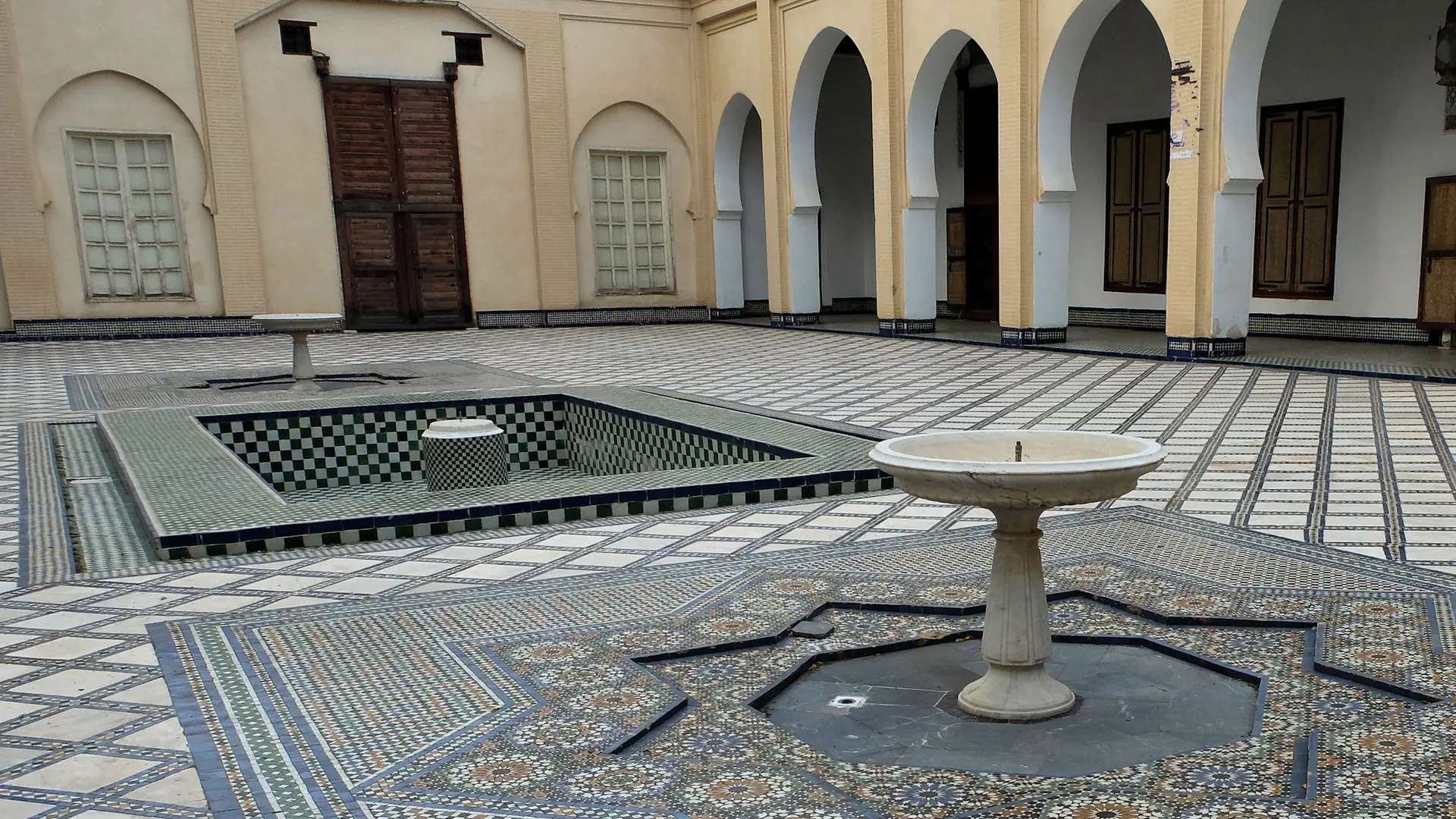
Palace dinner and folklore · Fes
Violin, oud and darbuka play live while dancers take the courtyard of a historic Fes palace.
Live folklore, belly dancing and fire acts around a table of your own, in a palace courtyard.
Four facts about the evening
Why a palace dinner
In Moroccan Arabic a diffa is a banquet for honoured guests, and the word is usually glossed as “reception”. The dinner follows that shape: bread and salads first, then a main dish, then fruit and mint tea. Moroccan meals have long opened with a run of small salads and moved on to a tagine or couscous, so a set dinner here reads as a proper meal, not a tourist plate.
Fes has a classical tradition of its own, tarab al-āla, which grew out of migration from Andalusia. A folklore band is a different thing, but the instruments overlap: the oud, the violin and the goblet drum all sit in the Moroccan Andalusi orchestra too, so the sound in the courtyard has a family resemblance to the city’s older music.
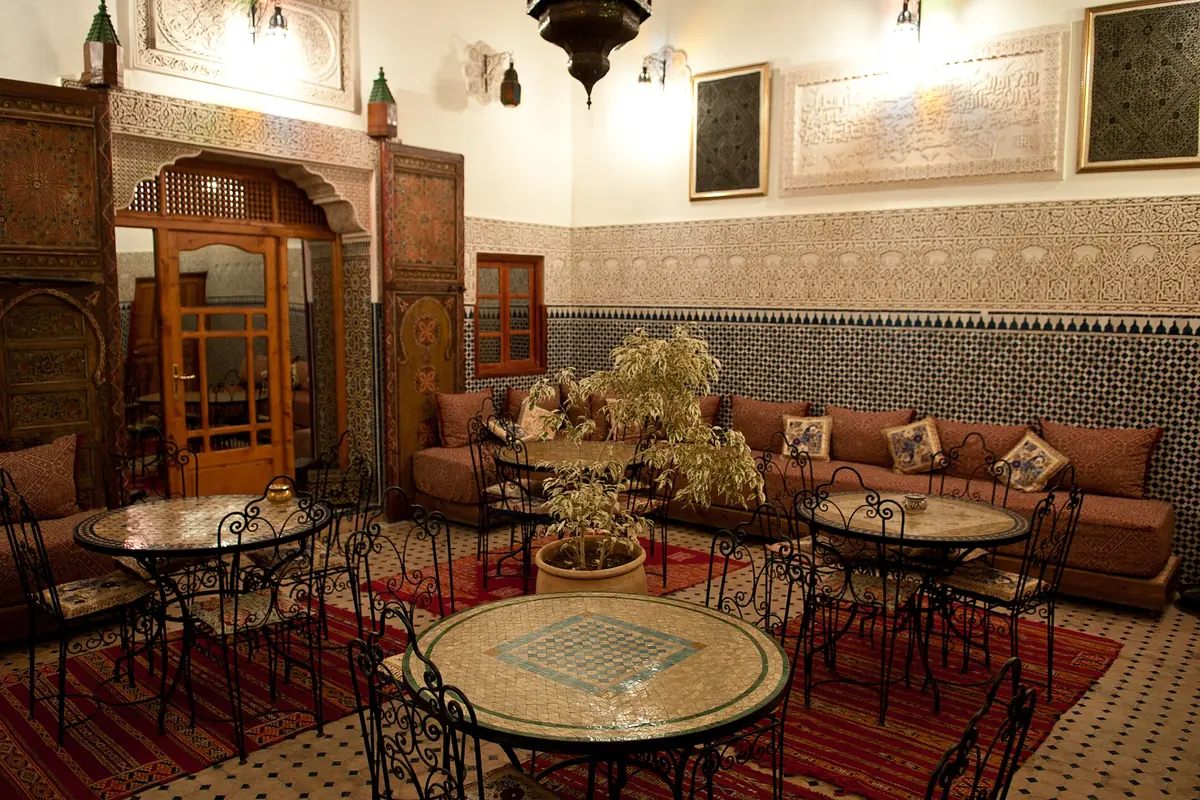
Traditional Moroccan houses turn inward around a courtyard and keep their decoration for the inside: carved plaster, painted wood and zellij tile. A palace takes that plan as far as it goes, which is why the evening is staged around the courtyard and not in a bare dining room. Give yourself a minute at the door to look up before you sit.
The diffa, in the order it arrives
A Moroccan banquet moves from small plates to a main dish to fruit and tea. The evening follows that order, with music and dancing running through it.
Fresh bread, olives and a spread of cooked Moroccan salads arrive first. Moroccan meals traditionally begin with hot and cold salads, and bread is the scoop, so use it freely.
Each guest picks one main course from a short set of Moroccan classics. A tagine takes its name from the clay pot it cooks in, whose cone-shaped lid sends steam back down into the stew.
A live folklore band plays through the evening. The violin carries the tune, the oud, a fretless lute, plucks alongside it, and the darbuka, a goblet drum, drives the rhythm.
Local dancers perform traditional folk numbers, belly dancing and simple fire displays join them, and a magic act is part of the entertainment. The evening is interactive, so expect to be drawn in.
Dessert is fresh seasonal fruit, followed by Moroccan mint tea and cookies. Tea is the sign of hospitality here: at least three glasses are traditionally served, poured from a height.
Some nights include a staged traditional Moroccan wedding in which guest volunteers dress up and join in. It runs when available, and nobody is obliged to take part.
Courses and acts can change on the night: take this as the usual pattern of the evening, not a fixed running order.
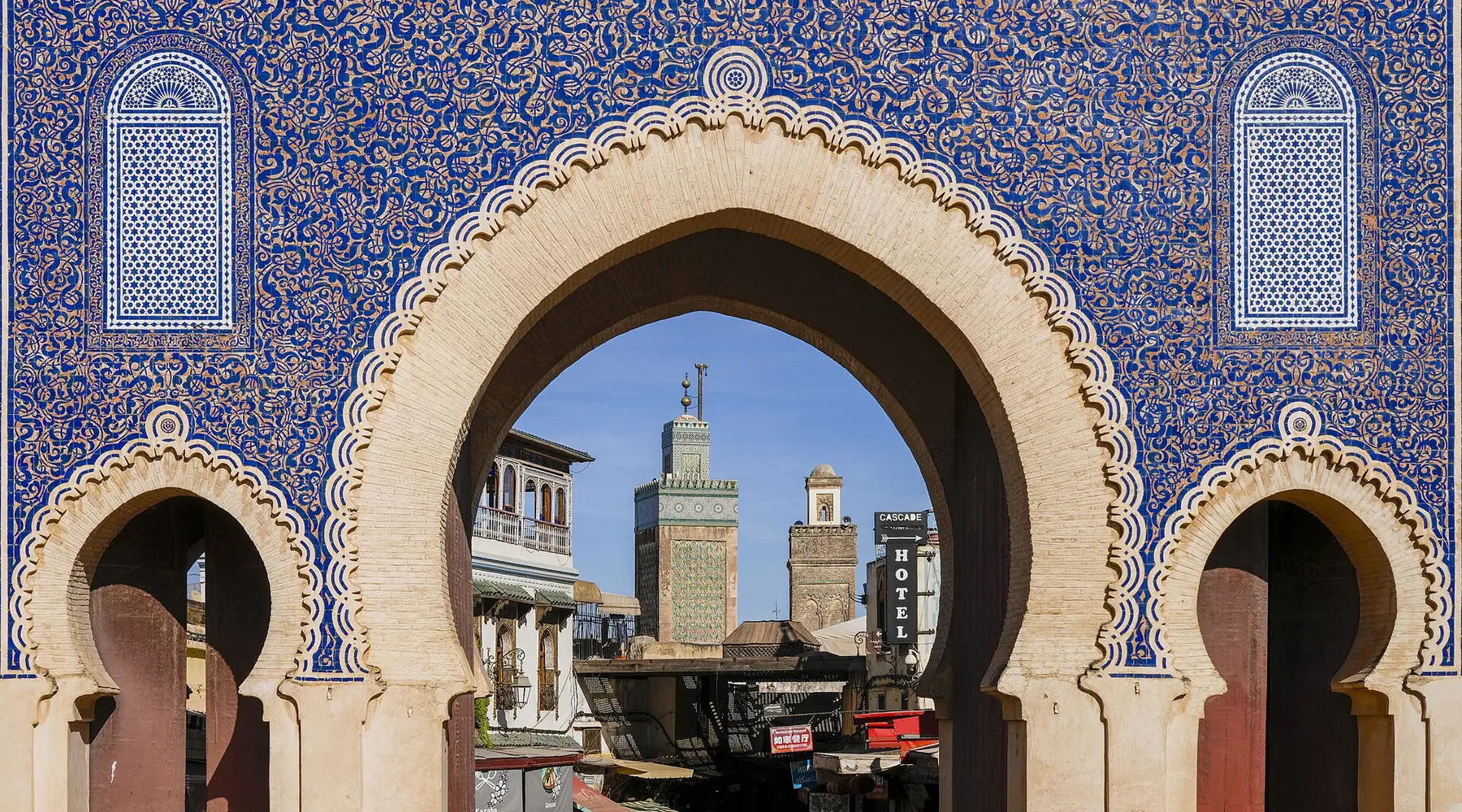
Inside a Fes palace
Moroccan palaces and grand houses face inward: a plain street front, then a courtyard of tile, plaster and carved wood.
Traditional Moroccan houses were centred on a courtyard, often with a gallery around it, and the rooms branched off. The size and craftsmanship of that space showed the owners’ wealth.
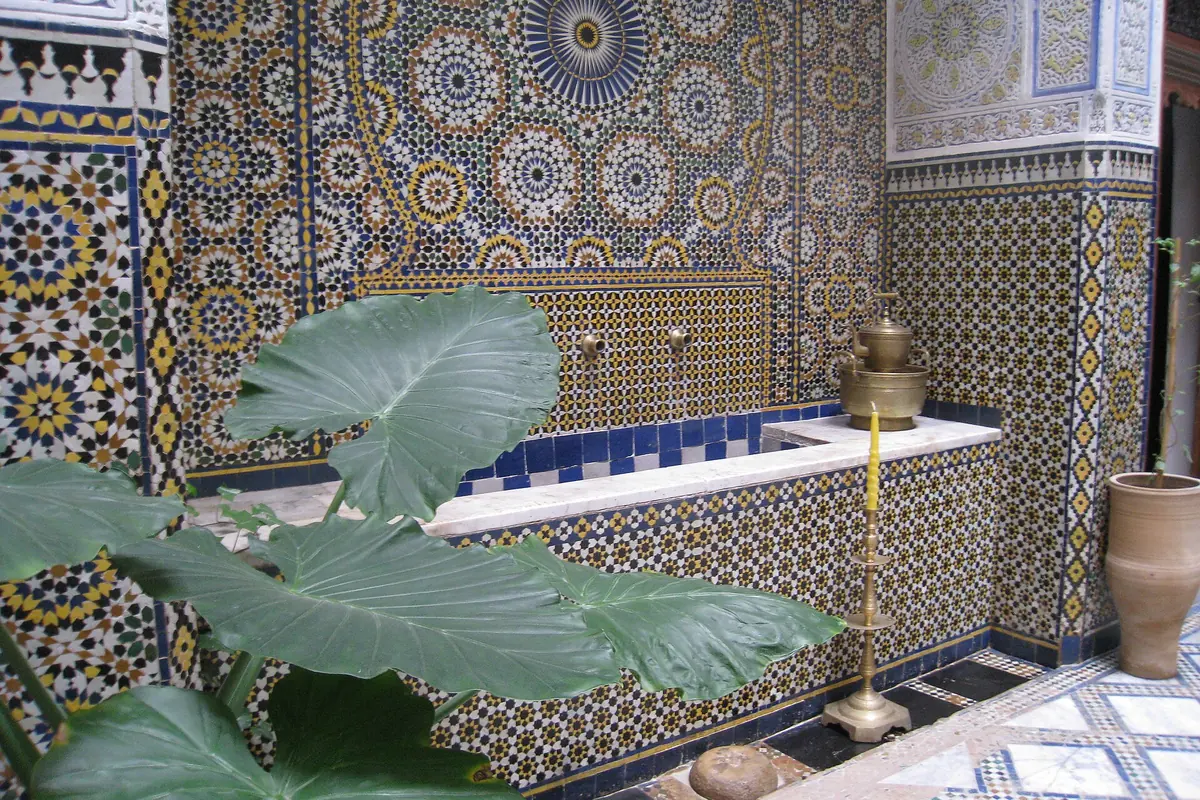
Zellij, a mosaic of hand-cut glazed tile pieces, is a standard decoration along lower walls and floors. It became widespread by the 14th century, in the Marinid period.
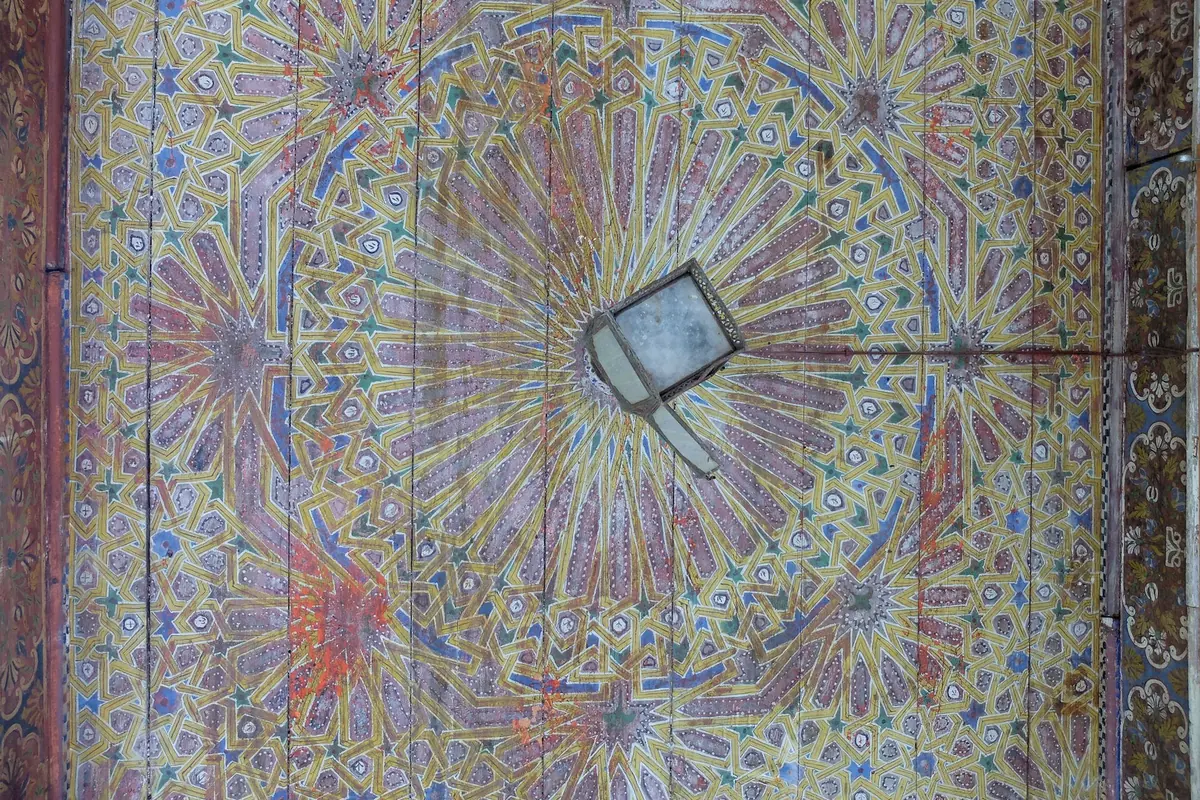
Sculpted wood, much of it cedar from the Middle Atlas, became a major part of the decoration from the Marinid period on, and carved plaster covers walls and ceilings in floral, geometric and calligraphic patterns.
Even rich mansions were usually plain on the outside, with few large windows and a bent entrance that blocked the view from the street, so the first sight of the courtyard is the point.
Fes and the palace tradition
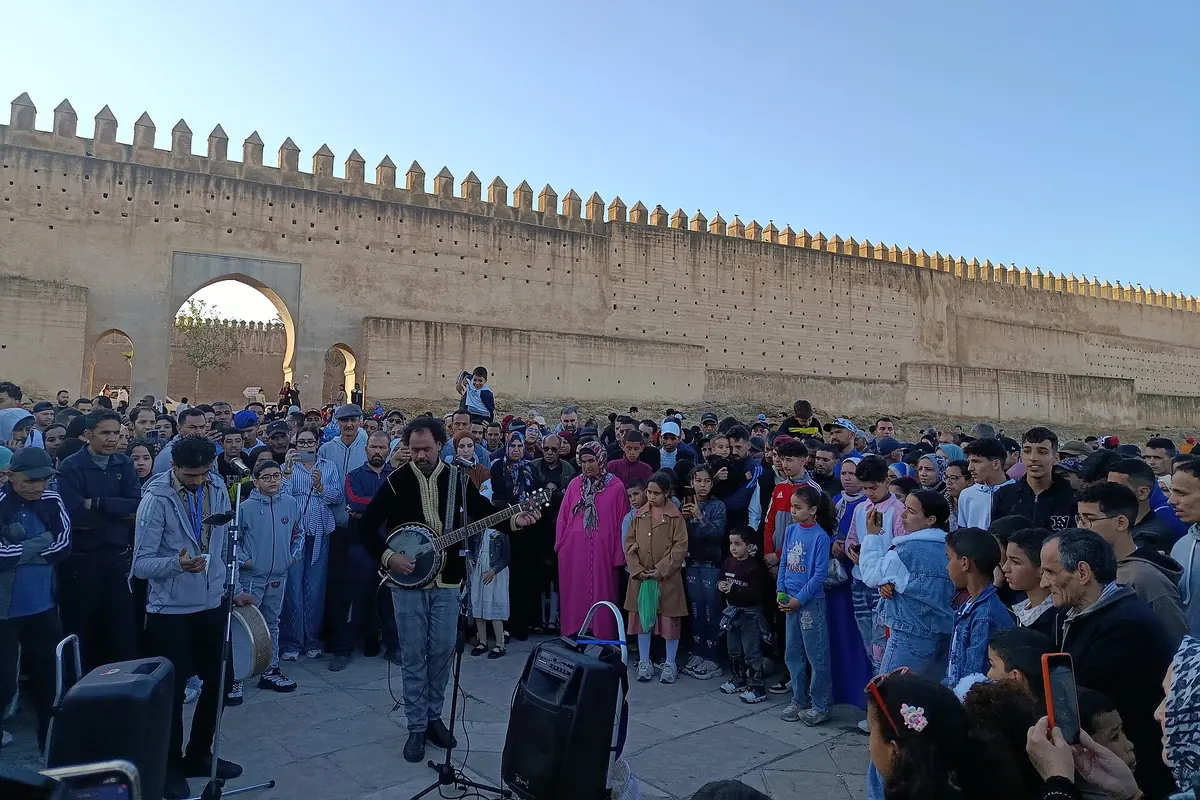
Photographs of Fes, its gates, its palace courtyards and its street music. None was taken at the dinner itself.
Ways to spend a Fes evening
| Option | What you get | Who it suits |
|---|---|---|
| Palace dinner and folklore show | Around three hours of dinner, live music, dancing and fire acts in a historic palace, with pickup from your accommodation; cancel free up to a day beforehand and pay later if you like. | Anyone who wants dinner, a show and a ride sorted in one booking. |
| Dinner at a medina restaurant you choose | A table where you pick the place, the menu and the pace, and you arrange the route through the lanes yourself. Music is not part of the deal. | Travellers who want to choose their own food and finish early. |
| A concert during the sacred music festival | Fes hosts an annual Festival of World Sacred Music, held in late spring or early summer; programme, dates and tickets are the festival’s own. | Visitors whose trip falls in that season. |
Book the Fes evening
Open the card for the nights on sale. A rail underneath shows other bookable things in Fes.
Around three hours of dinner, live music, dancing and fire acts in a historic palace, with pickup from your accommodation; cancel free up to a day beforehand and pay later if you like.
More to do in Fes
Practical details
The ticket lists pickup, and the booking calendar shows the details for your date. If your accommodation is inside the pedestrian old medina, vehicles cannot reach it, so the team arranges the nearest accessible pickup point.
Drinks are not part of the ticket, and the palace takes cash only for them, in Moroccan dirhams. Tips for the driver and the venue staff are not included either.
About three hours. You have a private table, so you are free to leave whenever you wish.
The driver speaks English, French, Spanish and Arabic, so you can ask about the route and the evening in your own language.
Choose loose, comfortable clothes that cover arms and legs, as UK travel advice recommends for women in Morocco, and flat shoes for the lanes.
Only the nights in the booking calendar are on sale, and every one lists its own start.
Guides to the food, music and setting
What the Fes palace dinner and folklore show ticket covers, how the evening runs, what costs extra and who it suits, before you book a night.
Read the Fes guide → Practical guideHow the Fes palace dinner runs in practice: pickup in the car-free medina, cash for drinks, what to wear and how to enjoy the night properly.
Read the Fes guide →FAQ
Around three hours, dinner and show together. Start times are listed per date in the calendar. Your table is private, so leaving early is fine.
Yes, the ticket lists pickup from your accommodation. If your riad or hotel is in the pedestrian zone of the old medina, cars cannot reach it, so the team arranges the nearest accessible pickup point.
Bread, olives, a spread of cooked Moroccan salads, a main course of your choice, fresh seasonal fruit, mint tea and cookies. Drinks are separate and are not part of the ticket.
No. Water, soft drinks and alcohol are all extra, and the venue takes cash only for them, in Moroccan dirhams. Bring notes with you, and a little extra for tips.
Mains are chosen from a set list, so message the provider from the booking page first if you follow a strict diet.
Possibly. The evening is interactive, and on some nights a staged Moroccan wedding invites guest volunteers to dress up and take part. You can stay in your seat and enjoy the show.
Yes, via GetYourGuide: cancel at least 24 hours ahead for a refund in full, or reserve now and pay later. Arrangements made outside GetYourGuide can carry different terms.
The booking page marks the evening wheelchair accessible. The old medina’s alleys are narrow and winding, so tell the provider about your needs before you book and ask how pickup and entry work.
Fares are per person and are converted into your own currency at checkout.